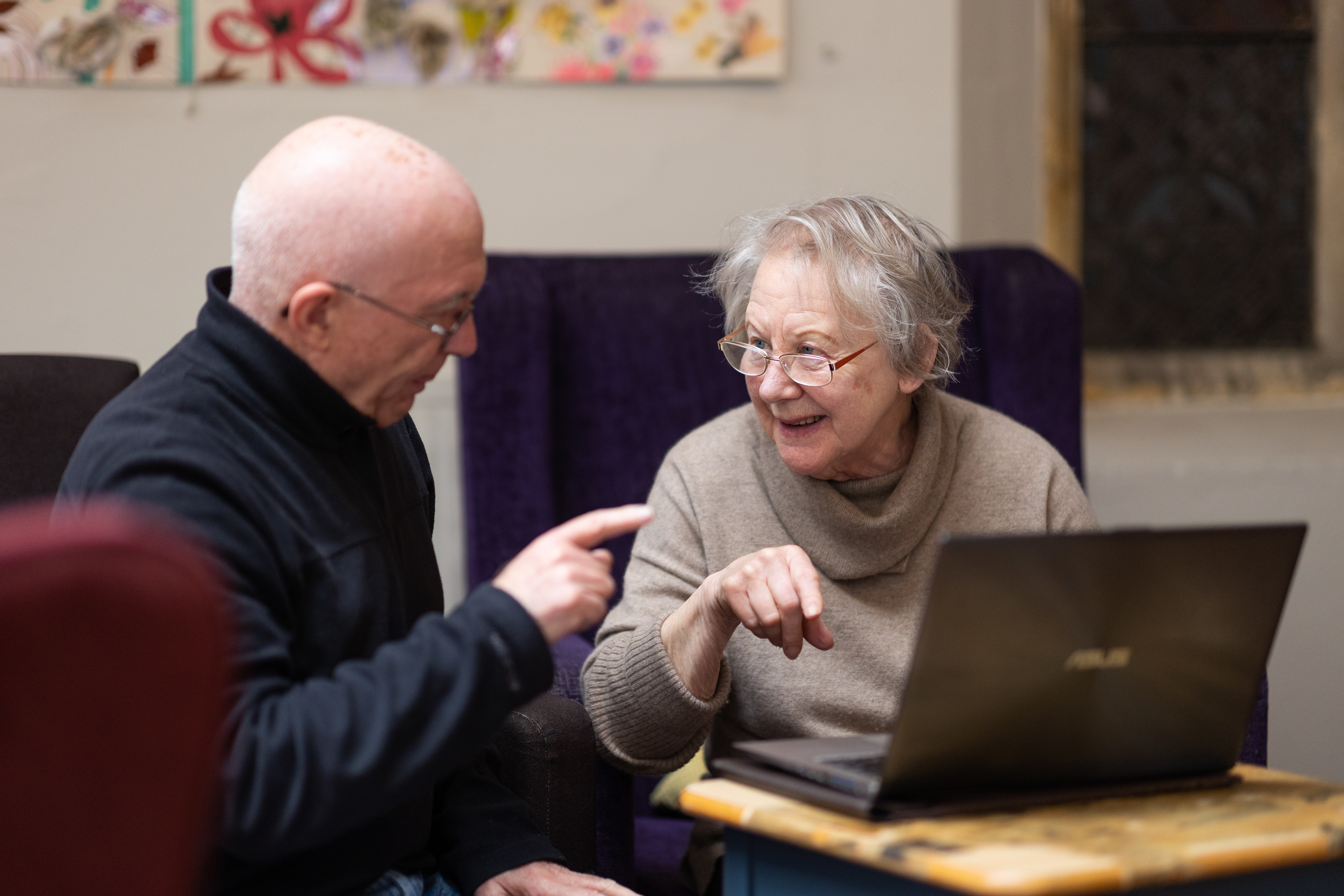
What happens to your data when you die? Can we create systems to help people better prepare their digital assets, such as photos, email accounts, subscriptions, and other online content, for when they pass away? There are no simple answers to these questions, but we want to explore them with you! If you are interested in discussing these topics, and contributing to the development of new technology, please read further.
We are continuing our research on digital legacy through the next phase of our study. We are conducting a long-term, focus group research study to create a system called Digital Directives. Digital Directives are inspired by medical or advance directives and are intended to help people create plans that outline who should have access to their digital assets, what should be accessed, how access should happen, what should happen to those assets and where these plans should be stored or shared. Our focus groups will use a participatory design methodology: participants help to design the digital directive planning tool. Through this work, we aim to better understand what kinds of features are important for older adults in digital legacy planning systems. Upon completion of the study, we plan to release the Digital Directive system to the general public, allowing anyone to use the tool that participants helped design.
Investigators:
Dr. Celine Latulipe (celine.latulipe@umanitoba.ca)
Simon Wermie, graduate student (wermies@myumanitoba.ca)
This study is part of a broader collection of studies that aim to explore how we can create tools to better help individuals plan their digital legacy. We also examine how software can be better with older adults in mind.
In addition to the public release of the Digital Directive system, the results of this study may be published in academic conferences or journals focused on older adults, technology, and digital accessibility. These findings may help inform future technologies and policy decisions.
Study details:
Participation in this study is voluntary. Participation involves five to seven focus groups with the same group of older adults, held approximately once a month from September 2026 to February 2027. Focus groups will be conducted virtually using UM Zoom. You will meet with a consistent group of 5 to 7 other older adults and the study researchers.
Initial focus group sessions will focus on generating ideas, while later sessions will involve researchers presenting working prototypes that you will be able to use and provide feedback on. The sessions will be scaffolded so that no technical or software design knowledge is required, beyond an interest in digital legacy planning. Focus group audio and video will be recorded.
Compensation:
There is no cost to participate. All participants will receive $150 in the form of either e-Transfer or an e-gift card. This will be paid in two instalments of $75: one during the first session and one during the fourth session.
Eligibility criteria
We are looking for individuals who meet all the following criteria:
- Be 55+ years old
- Reside in Canada
- Able to communicate in English
- Have basic computer skills
- Be able to use Zoom and be comfortable with having their camera active
- Willing to participate in 1 to 2-hour virtual focus groups approximately once a month from September 2026 to February 2027 (approximately 14 hours over 7 months)
Risks and Benefits
There is a risk of emotional distress that may be caused when discussing death in this context. We intend to minimize this risk by ensuring that participants are aware they do not need to answer every question or contribute to a discussion. Participants will be able to stop at any time or take a break during a session, and their compensation is not dependent on performance or perceived contribution during a session. We will inform participants that they can withdraw from the study if they are no longer comfortable continuing.
Additionally, if any negative feelings persist, we will encourage participants to seek a mental health professional in their area. Potential resources to contact include the National Suicide Crisis Line at 9-8-8, Klinic at (204) 786-8686, the Canadian Mental Health Association at http://www.cmha.ca/get-involved/find-your-cmha/ or they can find a professional psychologist through their physician or provincial psychological association at http://www.cpa.ca/public/whatisapsychologist/PTassociations/ .
The indirect benefit of this study is that participants will have a chance to reflect on digital legacy planning as well as interact with other older adults in a research environment.
Consent Forms
If you are interested in participating in this study, please follow the link below to the consent form. After you complete the consent form, we will reach out to schedule a one-on-one onboarding meeting before your first focus group session.
Participation in this study is completely voluntary. You may withdraw at any time, including during a session. The compensation amount will be prorated based on sessions attended, not including the onboarding meeting.
This research has been approved by the University of Manitoba Research Ethics Board. If you have any concerns or complaints about this project, you may contact any of the above-named persons or the Human Ethics Coordinator at 204-474-7122 or humanethics@umanitoba.ca.
Research Summary
Once the research study is complete, a summary of the results will be posted here. Participants also have the opportunity to have this summary emailed to them when it is available.

